The Quad-Wavelength
Picosecond Paradigm.
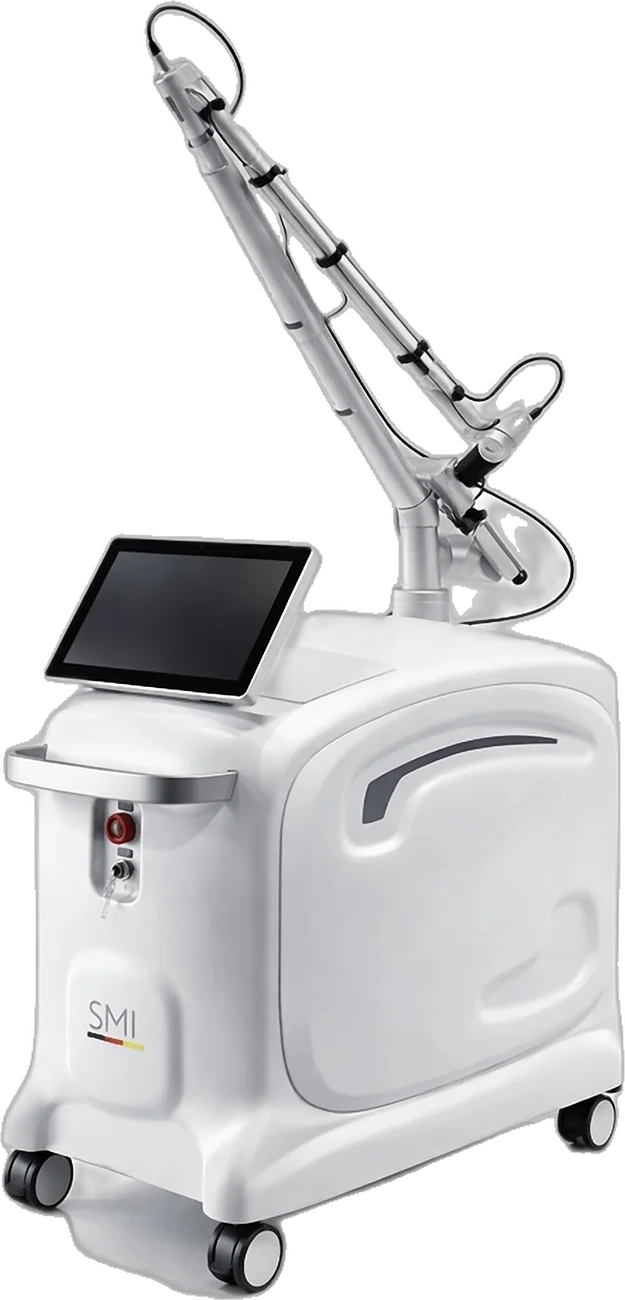
450–600 ps delivery, square-fractional LIOB, and an optimized 10 Hz protocol. A technical analysis of the quad-wavelength picosecond platform Kaiser PicoPro+.
Kaiser® PicoPro+ — Quad-Wavelength Picosecond Platform
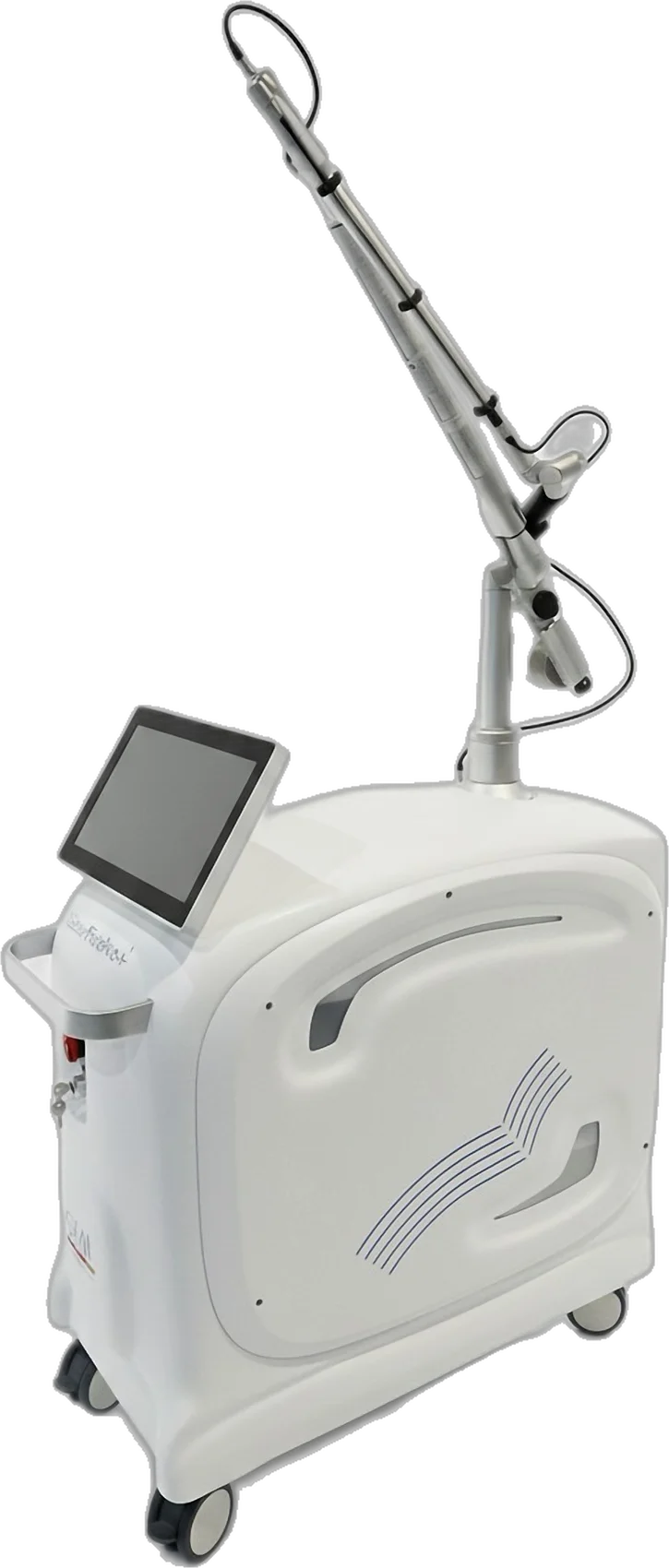
The physics of stress confinement.
At 450–600 ps, the pulse operates thousands of times faster than conventional Q-switched lasers. Energy is delivered faster than the acoustic relaxation time of the target chromophore, converting the tissue interaction from photothermal heating to photomechanical fragmentation.
Pulse durations in the picosecond (10⁻¹² s) domain bypass the thermal relaxation time of melanosomes, fragmenting pigment without collateral thermal damage.ⅰ Delivering energy faster than the acoustic relaxation time eliminates heat injury to surrounding tissue.
Nanosecond / IPL — photothermal heating
Slow pulses convert energy into heat, causing thermal injury to surrounding tissue.
Picosecond 450–600 ps — photoacoustic disruption / clean LIOB
Ultra-fast pulses generate photomechanical shockwaves that instantly fragment pigment.ⅰ
Photomechanical, not photothermal.
Conventional intense pulsed light (IPL) relies on broad-spectrum photothermal heating; heat diffusion raises the risk of post-inflammatory hyperpigmentation (PIH), most notably in Fitzpatrick skin types III–VI.
Photothermal heating (ms / µs domain)
A broad 400–1200 nm spectrum lacks target specificity; high heat diffusion forms a thermal damage zone in healthy tissue around basal-layer melanocytes.
Wang, C.-C., et al. (2006). JAAD, 54(5), 804-810. ⅲLaser-induced optical breakdown (LIOB) / acoustic fragmentation
Acoustically driven fragmentation: ultra-fast pulses generate photomechanical shockwaves that shatter pigment instantly, without collateral thermal damage.
Ross, E.V., et al. (1998). Arch Dermatol, 134(2), 167-171. ⅰ| Parameter | Conventional IPL | Picosecond toning |
|---|---|---|
| Pulse duration | Milliseconds (10⁻³) | Picoseconds (10⁻¹²) |
| Primary mechanism | Photothermal (heat) | Photomechanical (acoustic) |
| PIH risk (Asian skin) | High (requires caution) | Extremely low (subcellular precision) |
| Target depth | Superficial / epidermis | Multi-layer (epidermis and deep dermis) |
Lu, P.-H., et al. (2024). Comparing Low-Fluence Picosecond Nd:YAG Lasers. Cosmetics, 11(3), 89. ⅱ
Four wavelengths, four target depths.
The quad-wavelength target architecture. Select a wavelength to see its anatomical depth and target chromophore.
Feng, J., et al. (2023). Efficacy and safety of picosecond laser for the treatment of melasma. Lasers Med. Sci., 38(1), 84. ⅳ
755 nm Alexandrite: epidermal precision
Superior clearance of superficial pigmented lesions (solar lentigines, freckles) in fewer sessions. A 3× melanin-to-blood absorption ratio minimizes purpura (vascular injury / bruising).
Chan, J.C., et al. (2016). Lasers Surg Med, 48, 23-29. ⅵ1064 nm Nd:YAG: deep dermal clearance
Subcellular selective photothermolysis: melanin granules are destroyed while the melanocyte membrane and nucleus are preserved, preventing inflammatory rebound (PIH). Dermal melanophages are safely agitated, promoting macrophage clearance in Fitzpatrick types III–IV.
Kim, J.H., et al. (2010). J Invest Dermatol, 130(9), 2333-2335. ⅶ1320 nm Nd:YAG: the physics of water absorption
Bypasses epidermal melanin; energy is absorbed by dermal water (the target chromophore). A non-ablative heat shock (45–48 °C) produces immediate collagen contraction.
Goldberg, D.J. (2000). Dermatologic Surgery, 26(10), 915-918. ⅷThe standard high-throughput pico-toning protocol.
By matching each wavelength to its precise anatomical depth with highly standardized acoustic parameters, clinicians achieve maximal clearance with near-zero collateral thermal damage.ⅹ
Ultra-fast repetition maximizes clinical throughput with zero heat stacking, minimizing patient chair time.
The maximum peak power required to sustain a photoacoustic shockwave at large spot sizes.
Wide spot geometry ensures deeper, more uniform photon scattering into the dermis without epidermal scatter.
Choi, Y.J., et al. (2017). Lasers Surg. Med., 49, 899-907. ⅸSquare fractional optics eliminate geometric hotspots.
Square-fractional toning resolves the mathematical impossibility of circular tiling, reducing overlapping hotspots and coverage gaps to zero.ⅺ
✕Circular optics (conventional)
Double-fluence overlap creates PIH risk while under-treated cold spots occur simultaneously.
✓Square fractional (Kaiser)
Perfect tiling with no overlap and no gaps: uniform energy distribution across the entire treated field.
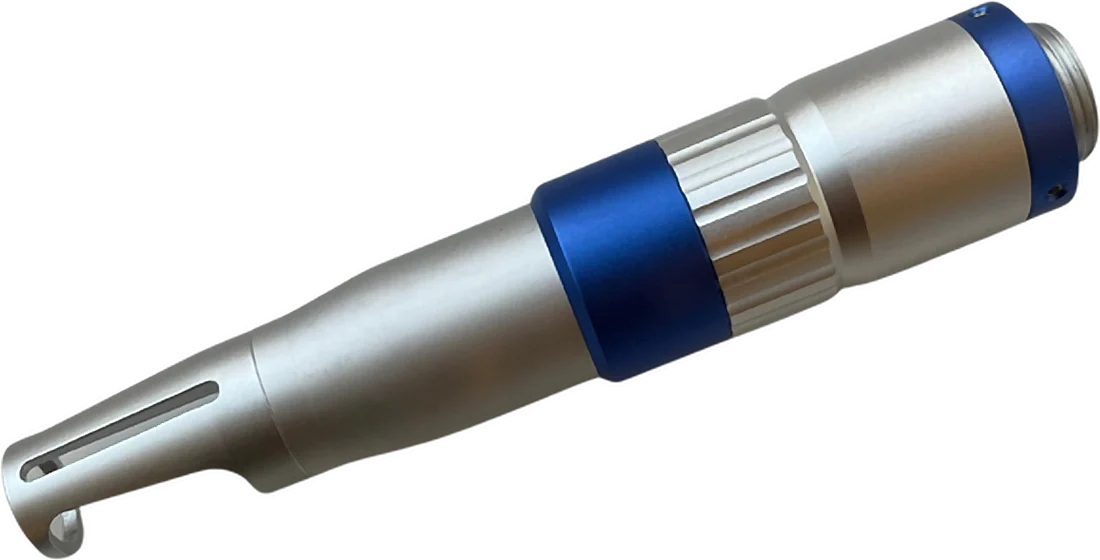
Square Fractional
Tattoo removal, pigmented-lesion treatment, and skin resurfacing. Covers a wide range of tattoos and pigmented lesions.
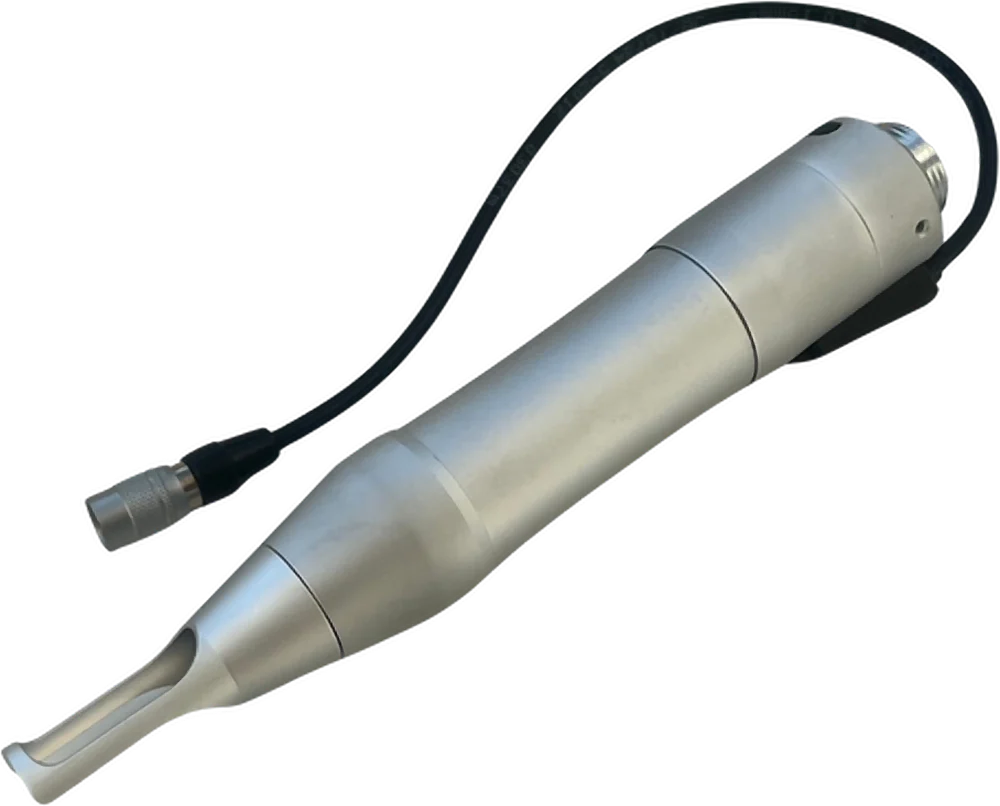
Toning / Spot
For removal of all pigment and tattoo types, and for skin rejuvenation. Standard handpiece configuration.
Industrial system engineering and workflow stability.
No preheating — ready in just 3 seconds
Ready the moment power is switched on. No waiting time, no disruption to your clinical flow: instant power-on enables a continuous, uninterrupted patient workflow.
Output stability across all four wavelengths
1.33 GW of peak power breaks pigment down decisively while maintaining absolute output stability across all four wavelengths.
Precise, intuitive parameter control
Paired with the high-performance laser arm, treatment parameters are controlled directly from the clinical UI dashboard.
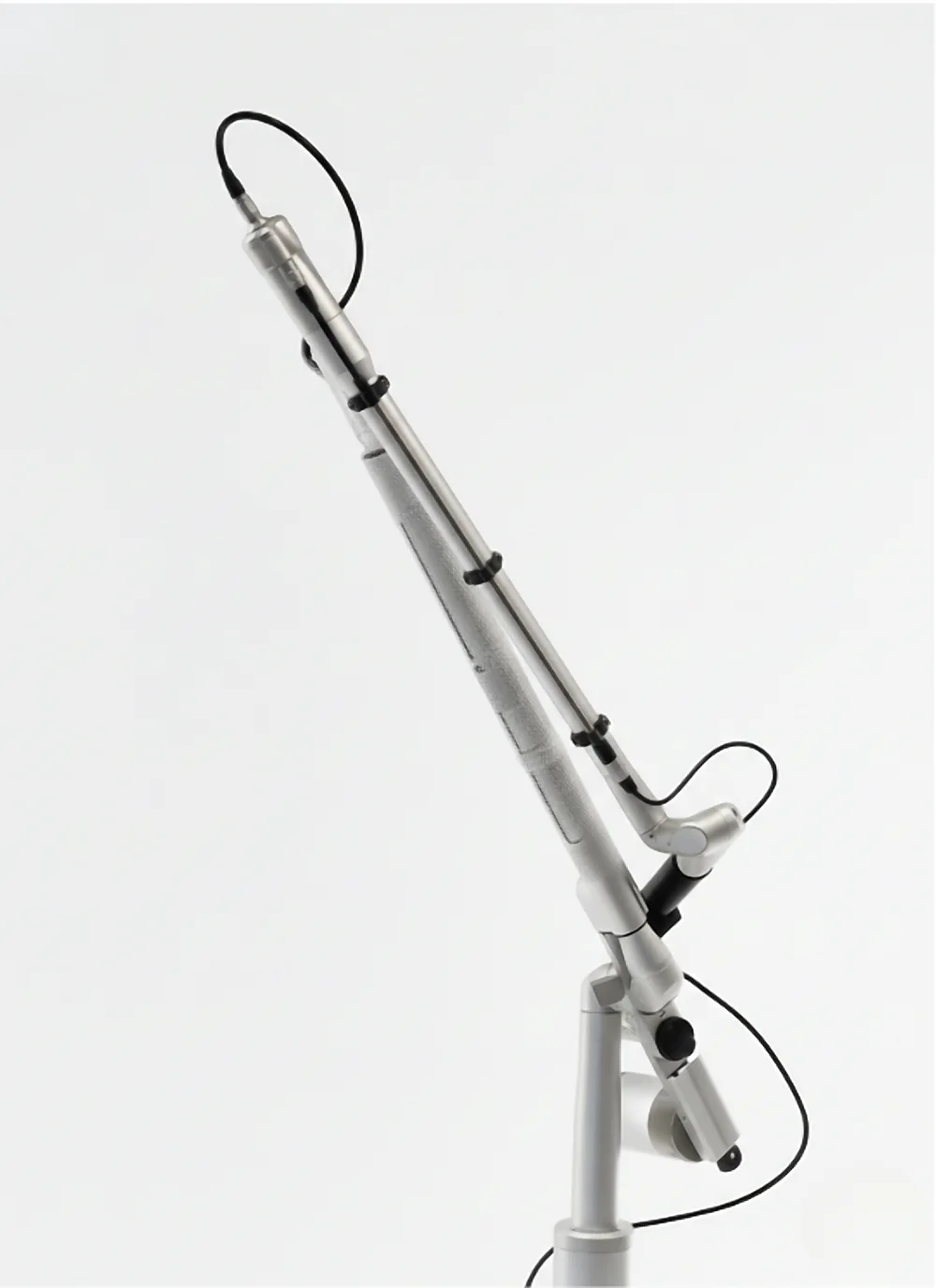
A 2-year free warranty.
Free after-sales service for two years from the date of purchase (excluding consumables and user-caused damage). Japan-area special terms: in Honshu, on-site or pick-up repair with a loaner unit shipped for the repair period; next-day response may also be available for Hokkaido and Kyushu depending on circumstances.
導入クリニック一覧。
Kaiser PicoPro+ を導入いただいている日本国内の医療機関。
掲載は、掲載のご同意をいただいた医療機関のみです。
Device demo and
purchase inquiries.
For demonstrations, documentation, and purchase terms. Support available in Japanese and English.
501, Ssangnyeong-dong, Gwangju-si, Gyeonggi-do, Republic of Korea
TEL +82 10-2478-8569 / Email global@Seoulmeds.com (Japanese and English available)
KaiserPicoPro+® is a trademark of SMI™.
This page provides product information for medical institutions and clinics. Purchase terms are provided individually.